Key Takeaways
- Pool water loss can result from normal evaporation, swimming, splashing, water features, or a hidden leak in the structure, plumbing, equipment, or liner.
- Hot weather, strong wind, direct sunlight, low humidity, warm water, and frequent pool use can increase normal evaporation.
- A bucket test can help compare water loss from the pool with evaporation under similar conditions; significantly greater pool loss may indicate a leak.
- Frequent refilling, wet areas, visible cracks, equipment leaks, damaged liners, or rapidly falling water levels are warning signs that professional testing may be needed.
- Addressing leaks early can help prevent water waste, soil or structural damage, equipment strain, and ongoing difficulty maintaining pool water chemistry.
Finding that your swimming pool water level is lower than expected can be concerning. Some water loss is completely normal, particularly during hot weather, but a noticeable or continuous drop may indicate a leak.
The challenge is determining whether the water is disappearing because of natural evaporation, swimming activity, splashing, or an actual problem with the pool structure or plumbing. Since leaks can become more expensive when left unresolved, knowing the difference is important.
A swimming pool loses water naturally every day. Warm temperatures, dry air, wind, sunlight, and pool usage can all increase the rate of water loss. At the same time, cracks, damaged plumbing, worn seals, failing equipment, and damaged liners can allow water to escape much faster than normal.
Understanding the common causes of water loss and knowing how to perform a basic comparison test can help you decide when professional assistance is appropriate.
Not sure whether your pool is losing water because of evaporation or a hidden leak? A professional inspection can help identify unusual water loss and determine whether further testing is needed.
How Much Pool Water Loss Is Normal?
There is no single amount of water loss that is considered normal for every swimming pool. Evaporation rates depend on weather, pool size, water temperature, humidity, wind exposure, and how frequently the pool is used.
A pool exposed to direct sunlight and strong winds will generally lose water faster than one protected by surrounding structures or landscaping.
Water can also be lost through normal activity. Swimmers carry water out of the pool, splashing can move water over the edges, and activities around the pool can contribute to gradual water loss.
The important factor is whether the amount of water disappearing seems consistent with the conditions. If you suddenly need to add substantially more water than usual, there may be another explanation.
Where Can Pool Leaks Occur?
A swimming pool contains many potential locations where water can escape. Leaks can occur in the pool shell, plumbing lines, fittings, drains, skimmers, lights, return lines, equipment connections, or other components.
The location of the leak can also affect how quickly water disappears.
Plumbing Leaks
Underground plumbing leaks can be particularly difficult to identify because the damaged section may be hidden beneath concrete, landscaping, or soil, making Aloha Custom Pools a helpful resource for professional leak detection and pool repair.
A plumbing leak may allow water to escape even when the visible pool structure appears to be in good condition.
Equipment Leaks
Water can also escape around pumps, filters, heaters, valves, and plumbing connections.
If you notice water accumulating around the equipment pad, the source should be investigated.
Liner Leaks
Pools that use vinyl liners can develop punctures or tears. Damage may occur because of age, sharp objects, installation issues, or other factors.
A professional should assess the liner and surrounding components if water loss is suspected.
Does Pool Type Affect the Way Leaks Are Diagnosed?
The construction and design of a pool can influence how a leak develops and how it is located.
A custom in-ground pool may have complex plumbing, multiple drains, lighting systems, water features, and other components. This can create several potential locations that require evaluation when unexplained water loss occurs.
Similarly, pools installed by a semi-inground pool can have construction characteristics that differ from fully in-ground or above-ground installations.
Regardless of pool type, the goal is the same: determine whether water loss exceeds normal evaporation and identify where the water is escaping.
Can Swimming Pool Features Cause Water Loss?
Some pool features can contribute to normal water loss.
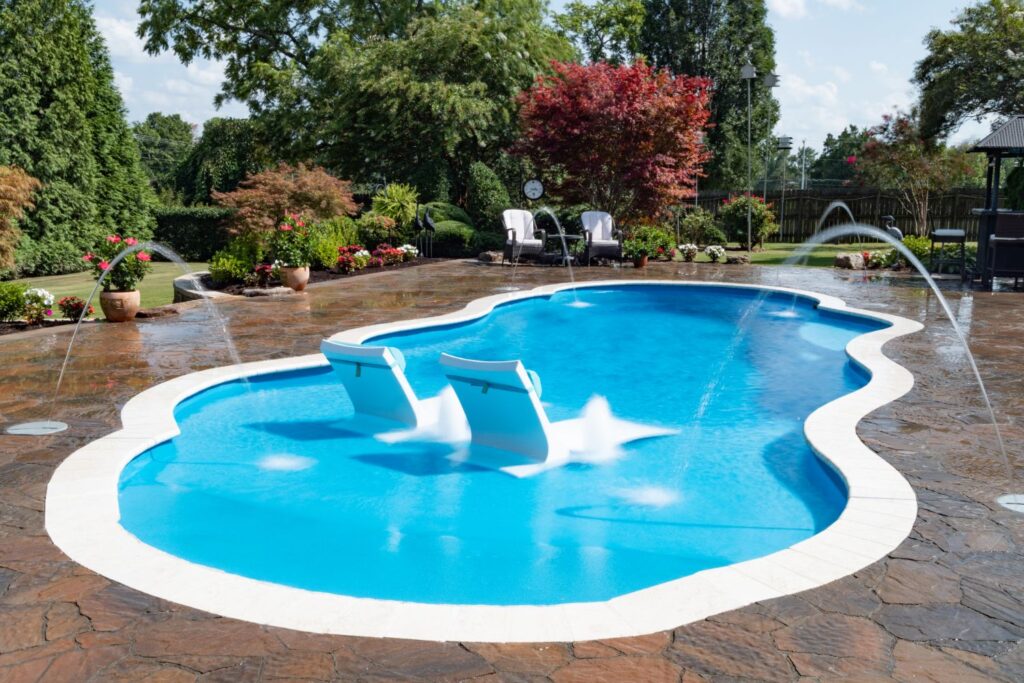
Waterfalls, fountains, spillways, jets, and other swimming pool water features can increase water movement and surface exposure. Splashing and wind can therefore result in more water leaving the pool.
This does not necessarily mean there is a leak.
However, if water loss increases dramatically or continues even when water features are turned off, the system should be investigated.
Water features also contain plumbing and connections that can potentially develop leaks, particularly as components age.
What Happens If You Ignore a Pool Leak?
Ignoring a leak can allow the problem to become more complicated.
Escaping water may saturate surrounding soil, affect landscaping, undermine certain surfaces, or contribute to structural problems depending on where the water is going.
A leak can also require increasingly frequent refilling, which wastes water and makes pool maintenance more difficult.
If the leak affects the circulation system, continued operation may also place stress on pool equipment.
Pool Water Quality Can Provide Additional Clues
A leak does not necessarily cause immediate changes in water chemistry, but frequent water replacement can affect chemical balance.
When homeowners repeatedly add fresh water to compensate for losses, the concentration of chemicals in the pool may change.
Effective pool water cleaning and maintenance therefore become more difficult when unexplained water loss is occurring.
However, cloudy or poorly balanced water does not automatically mean there is a leak. Water chemistry, filtration, sanitation, and circulation all need to be considered separately.
How to Reduce Evaporation
If your pool is losing water primarily through evaporation, several maintenance strategies can help reduce unnecessary water loss.
Use a Pool Cover
A properly fitted cover can reduce the amount of water exposed to the surrounding air when the pool is not being used.
This can be particularly helpful during periods of high temperatures, low humidity, or strong winds.
Monitor Water Temperature
Keeping pool water at a reasonable temperature can help control evaporation. Excessive heating can increase water loss.
Protect the Pool From Wind
Landscaping, fencing, and other appropriate windbreaks can sometimes reduce wind exposure around a pool.
However, these measures should be planned carefully so they do not create other maintenance problems.
When Should You Call a Professional?
Professional help is appropriate when water loss is significant, unexplained, or persistent.
You should consider an inspection if:
- Water continues dropping despite normal weather conditions.
- A bucket test suggests excessive water loss.
- You see wet areas around the pool or equipment.
- The pool pump or circulation system behaves unusually.
- The pool structure or liner shows visible damage.
- You are repeatedly adding water to maintain the correct level.
Professional testing methods can help narrow down the source without unnecessarily disturbing the pool or surrounding property.
Leak Detection for Larger and Commercial Pools
Larger pools can have more extensive plumbing networks and equipment systems.
For commercial installations, identifying a leak promptly can be especially important because the volume of water involved may be substantial and the pool may be used frequently.
Commercial pool contractors can evaluate larger systems with their specific circulation, filtration, drainage, and operational requirements in mind.
The same principle applies to residential pools: accurate diagnosis is generally preferable to guessing where the water is escaping.
What If the Pool Uses a Vinyl Liner?
Vinyl-lined pools require specific care because the liner forms a major part of the pool’s waterproof barrier.
Small punctures may be difficult to see, particularly when they occur underwater or in less accessible areas.
If you suspect a liner problem, it can be useful to have the liner and associated fittings inspected. Homeowners may also work with specialist pool liners installers when a liner is damaged beyond practical repair.
A liner leak should be distinguished from a plumbing leak because the appropriate repair approach can be very different.
Not sure if your pool is losing water from normal evaporation or a hidden leak? Schedule a consultation with Aloha Custom Pools for professional pool service and repair guidance before a small issue becomes a bigger problem.
Final Thoughts on Pool Water Loss
A dropping pool water level does not automatically mean your pool has a leak. In many cases, evaporation is a normal part of pool ownership, particularly during hot, dry, or windy conditions.
However, persistent or unusually rapid water loss deserves attention.
Look for warning signs such as frequent refilling, wet areas around the pool, visible cracks, equipment changes, and water loss that continues when the pool is not being used.
A bucket test can help you compare evaporation with actual pool water loss, while professional testing can help locate a hidden leak when the evidence points toward one.
Frequently Asked Questions
1. How do I know if my pool is leaking or just evaporating?
Use a bucket test: place a water-filled bucket on a pool step (weighted down), mark water levels inside the bucket and on the pool wall, then compare after 24 hours. If the pool level drops significantly more than the bucket level (beyond ~¼ inch/day difference under similar conditions), a leak is likely. Evaporation affects both equally; leaks cause extra pool-only loss.
2. How much water should a pool lose each day?
There’s no universal daily amount, typical evaporation ranges from ¼ to ½ inch per day, but it varies with temperature, humidity, wind, sunlight, water temp, pool size, and usage. Hot, dry, windy conditions can push loss toward ¾ inch or more. A sudden increase beyond your pool’s normal pattern (e.g., needing to add water daily when you rarely did before) signals a potential leak.
3. Can a pool leak cause the water level to drop quickly?
Yes, significant structural or plumbing leaks can drop water levels several inches or even feet per day, far exceeding normal evaporation rates. Leaks at skimmers, returns, main drains, equipment pads, or liner tears often accelerate loss. If the water level falls below the skimmer opening or you’re refilling multiple times weekly, suspect a leak and investigate promptly.
4. Can I find a pool leak myself?
You can perform basic checks like the bucket test, visual inspections for wet spots/cracks, and monitoring equipment pads for pooling water, but hidden leaks usually require professional detection. DIY methods miss underground plumbing leaks, hairline shell cracks, or liner punctures underwater. Pros use pressure testing, dye testing, acoustic listening devices, and electronic leak detection for accurate location.
5. Should I keep adding water if my pool has a suspected leak?
Temporarily, yes, to protect equipment and prevent further damage, but it’s not a fix and wastes water/chemicals. Keep the level at mid-skimmer to avoid pump dry-running, but schedule a leak inspection ASAP. Continual refilling masks the problem, skews water chemistry, and can worsen soil saturation or structural issues around the pool.
6. Where do pool leaks most commonly occur?
Most leaks happen at skimmer throats, return fittings, main drains, light niches, liner seams/tears, equipment pad connections, and underground plumbing joints. Equipment pads showing constant dampness, soggy soil near the pool shell, or air bubbles in return lines are strong indicators. Vinyl liners often leak at seams, corners, or where objects puncture the material.
7. What are the signs of a pool leak vs. normal evaporation?
Leaks show rapid/unexplained water loss, soggy ground around the pool/equipment, air bubbles in returns, chemical imbalances from frequent refills, or visible cracks/tears. Evaporation causes gradual, weather-correlated loss without wet spots, bubbles, or structural clues. If loss continues when the pool is covered or unused, or exceeds bucket-test results, it’s likely a leak.
8. Can pool features like waterfalls or fountains cause water loss?
They increase normal evaporation and splash-out but don’t inherently cause leaks, unless their plumbing, seals, or fittings are damaged. Turn off all features for 24–48 hours and retest with the bucket method. If loss slows dramatically, features were contributing to evaporation; if loss remains high, suspect a leak in the feature’s plumbing or structure.
9. How can I reduce pool water evaporation?
Use a fitted pool cover when not in use, lower water temperature slightly, add windbreaks (fencing/landscaping), and reduce surface agitation from features. Covers can cut evaporation by 90%+ and save water/heat. Avoid excessive heating in dry/windy weather, and ensure auto-fill devices (if present) aren’t masking underlying leak issues.
10. When should I call a professional for pool leak detection?
Call a pro if the bucket test confirms excess loss, you see wet areas/structural damage, the pump loses prime, or you’re refilling more than 2–3 times weekly. Professionals pinpoint leaks without unnecessary digging using pressure tests, dye tests, and electronic tools. Early detection prevents costly structural damage, equipment failure, and water/chemical waste.